Introduction
The effects of climate change have become apparent only in recent times, but the causes which are industrial pollution and unsustainable use of fossil fuels have been present for the last 400 years since the beginning of the Industrial Revolution in England. Climate change which is also known as anthropogenic warming or increase in temperature due to human activity results in extreme changes in weather, melting of ice caps leading to a rise in sea levels, and endangering biodiversity in ecologically sensitive zones. All this has an economic, social and political impact as well. Although some world leaders refuse to acknowledge climate change and scientific publications which prove its existence, during the past decade people in general have accepted that it is a real phenomenon. Some governments like China are tackling climate change on a war footing by forcing people to recycle their waste or face punishments, while countries like the USA have eased environmental regulations to reopen closed coal powered energy plants.
It is very hard to quantify the economic impact of climate change on the GDP of nations, as the pace at which countries are tackling greenhouse emissions is varied in different parts of the world. But it is possible to arrive at certain conclusions like the world would move towards a more service sector oriented economy, and energy producing countries will be forced to diversify their economies and invest in renewable energy due to greater consumer awareness. According to OECD reports there could be an annual GDP loss of around 3% due to climate change by the year 2060 taking into account the effect of mitigation policies.
Impact of Climate Change on the Structure of Global Economies:
Climate change is expected to have a varied impact on different sectors in the economy. In the primary sector crop yields will be severely affected and farmers will be forced to rely upon genetically modified crops which can survive even in extreme temperatures. Due to the increase in sea temperature the composition of fishes will change, with some fishes who survive in warm water becoming more abundant while cold water fishes like salmon will not be plentiful and the supply would have to be shifted to temperature controlled commercial fish farms. Livestock production is also expected to suffer but only marginally.
Also, due to rising sea levels there will be a loss of land near the sea, which would
have a great economic impact as a lot of infrastructure and industries are located near ports for ease of trading. Due to increasing frequency of extreme weather events like hailstorms, hurricanes and floods, there would be substantial infrastructure loss but would increase the GDP in the short run, as public spending will ensure that the infrastructure is rebuilt. But such reports fail to take into account the psychological, social and political impacts of such events as well. Social unrest and riots for water have become a common thing in India, the most prominent one being the fight between the Indian states of Karnataka and Tamil Nadu for water from the river Kaveri.
Other sectors which would be substantially be impacted by climate change are tourism, medical services, insurance, etc. Mitigation policies can only minimize the losses to these sectors, and countries would have to fundamentally change their economic planning to adjust to this new normal.
Key Variables to Assess the Impact of Climate Change
- Greenhouse Gas Emissions:
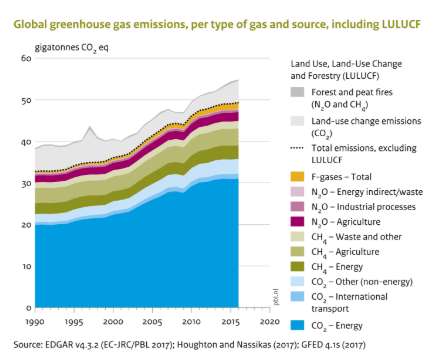
The Greenhouse effect refers to the warming of the earth’s atmosphere due to certain gases like carbon dioxide (CO2) and methane (CH4) which trap heat inside them. Ideally, the sunlight which enters the earth’s atmosphere is reflected back from the surface, but heavier greenhouse gases trap heat inside them which makes the land near the surface comparatively warm for a longer period of time.
- Rise in Average Global Temperature:
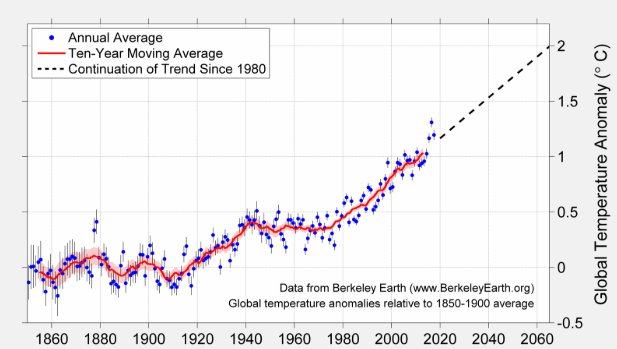
The main variable which should be considered to determine the impact of climate change is the rise in global temperatures throughout the years. The dramatic increase in
temperature during the past few decades shows the severity of human activities and unchecked industrialization. International climate deals like the Paris Climate Agreement and the Kyoto Protocol have managed to attract attention to the issue of climate change, but even these deals have not been ratified by all countries, and recently the world’s largest polluter, the USA pulled out of the Paris Climate Deal due to negative economic impacts of stricter environmental regulations.
One of the key variables in determining how far a country has come in fulfilling its commitment to tackle climate change is the increase in renewable energy investment.
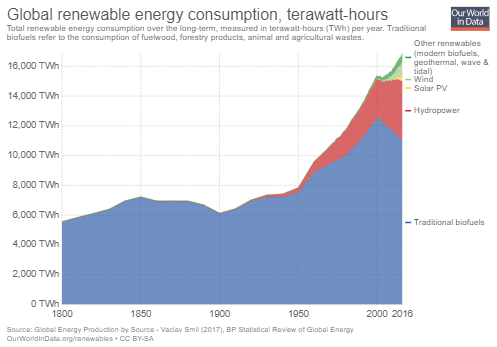
From the year 2000, usage of fossil fuels for producing energy has reduced dramatically as countries realized that those fuels caused a lot of air pollution and increased carbon emission levels. The production gap has been replaced by hydel power due to massive public investments in building dams to provide water to an ever increasing population as well as industries. Energy sources like wind and solar are relatively new and therefore very expensive to produce. Because they are not as cheap as coal, only developing countries with substantial capital have started adopting them on a large scale. But falling prices of solar panels and windmills have made sure that it will be commercially viable to use renewable energy in the coming decades.
Variables like per capita carbon emissions should decrease if we are to control rising temperatures, but due to economic growth and rising income this seems to be far from reality. Policy makers have considered creating a “carbon tax” for industries to take pollution seriously.
Mitigation Policies and their Effects
Fiscal policies:
- Carbon Tax:
A carbon tax would increase the prices of goods which are produced in a manner which is environmentally harmful and increases emissions substantially. This would not only make consumers more aware of how commodities they buy are produced but would also incentivize producers and manufacturers to adopt cleaner production techniques and methods to reduce the prices of their goods.
- Emission Caps:
Power plants and other industries can have a cap on the maximum amount of emissions they can emit each day. This would require strict government oversight as industries have a habit of ignoring regulations and finding ways to bypass them. It is a viable option for countries where the government control over the economy is substantial like China.
- Stricter Environmental Regulations:
This policy is the hardest to implement for developing and underdeveloped countries as they do not have a strong industrial base to cater to domestic demand and other problems like unemployment and poverty. It is well known that introducing tighter regulations affects economic growth substantially, as is evident from European countries. But because they have the required technology to design eco-friendly solutions, the impact on economic growth is less severe than on developing countries like India. The impact of climate change will be felt the most by South East Asian countries as well as sub Saharan countries, almost all of which are either underdeveloped or developing. Hence it is in their interest to take action in the form of mitigation policies, even though they are the least capable for doing so.
Challenges for Policymakers:
- Determining a stable rate of carbon tax
- Ensuring that not only large plants but also small emitters like cars are carbon taxed.
- Providing adequate subsidies and incentives to R&D companies to design more efficient technologies for reducing pollution and carbon emissions.
- Assuring small and medium scale enterprises (MSME’s) that environmental regulations would not affect competitiveness of the firms and their revenues. This would require international cooperation as only one country taxing its businesses would render firms in that country uncompetitive.
References:
Dellink, R. (2016), “Macroeconomic Consequences of Climate Change: interactions
between adaptation and mitigation”, OECD Publication Paris,
ISBN 978-92-64-23540-3
Farid, M. (2015), “After Paris: Fiscal, Macroeconomic, and Financial Implications of
Climate Change”, IMF Staff Discussion Note, retrieved from www.imf.org


 Macroeconomic Impact of Climate Change on the Global Economy and Effective Mitigation Policies
Good job.
LikeLike
Really Comprehensive and we’ll set up !
LikeLike
Informative
LikeLike
Great work,very informative
LikeLike
This blog is structured in such a way that it leaves a good insight about the pressing issue on global warming and climate change.
The various key aspects or factors causing global warming and the issues and problems that are faced by the average increase in temperature is addressed here. I feel that this blog has served it’s purpose of spreading awareness about the issues and attempts us to take various measures to handle the situation.
LikeLike
A great insight into the effects of climate change from a macroeconomic view point.
LikeLike